
A review of The Problem of Passing, Sandra Harvey, Duke University Press, 2026.
 Sandra Harvey’s The Problem of Passing argues that racial passing should not be understood primarily as an individual’s choice to “become” or impersonate someone else—such as a light-skinned Black person passing for white. Instead, Harvey shifts attention to the people and institutions that accuse, identify, and police passing in a more general sense: passing for white or assuming a racial identity that contradicts one’s family history or genetic makeup; passing for the opposite sex in the case of transgender identities; passing for able-bodied when one is disabled; passing for straight when one is gay; etc. Historically and conceptually, Black slaves passing for white to escape pursuers in the Antebellum South constitute the matrix in which all forms of passing in America have been shaped, which makes Black studies the central discipline to address the problem of passing. Harvey treats passing as a structure of surveillance: a way the United States has historically organized fears about Black freedom, mobility, illegibility, and supposed criminality. Passing is not passé; we haven’t been able to move beyond the problem of passing. Harvey contends that narratives of Black racial passing remain essential for understanding contemporary Black life, even though scholarship often regards passing as a historical phenomenon superseded by civil-rights-era demands for Black visibility. Passing, she argues, has never disappeared; it continues to shape how Black people are watched, classified, and exposed to state and vigilante violence. Her key conceptual intervention is to move from the passing subject to the accuser; from passing as an individual strategy to passing as a collective experience; and from racial or gender passing to a move that is always already both. Her book is especially well suited to showing that racial passing is not a marginal literary trope; it is a route into the modern political architecture of identification, surveillance, scientific authority, and state power.
A structure of surveillance
Conventional accounts ask why an individual passes and what freedom, safety, or social mobility they seek. Harvey instead asks why observers feel compelled to decide whether someone is “really” who they appear to be. The accusation that someone is passing becomes a technique of racial discipline: it authorizes surveillance, fixes identities, and regulates movement and belonging. In this account, “passing” is not merely self-presentation. It is also something done to people through acts of reading, suspicion, documentation, classification, and narration. Harvey traces the modern U.S. logic of passing to chattel slavery. Enslaved people who moved without authorization could be deemed fugitives; written passes, free papers, clothing, bodily marks, and racialized descriptions became instruments for distinguishing the supposedly legitimate from the fraudulent. Runaway-slave advertisements helped turn the “pass” into a broader cultural story about Black people’s alleged capacity to deceive, evade capture, or pass for free. This history produces a persistent contradiction: Blackness is imagined as hypervisible—instantly legible as racial difference and criminal threat. Yet Blackness is also imagined as potentially unreadable or deceptive—capable of escaping the watcher’s gaze. Black people have nowhere to hide except in darkness, deception, and fraud. Harvey argues that this contradiction fuels an imperative to watch more intensely. The state, police, scientists, and ordinary citizens are positioned as “master hunters” who must continuously authenticate the racialized other. Surveillance thus responds not simply to what Blackness visibly is, but to an anxious fantasy that Blackness may evade classification and control.
Trayvon Martin’s killing, one of the tragedies at the origins of the Black Lives Matter movement, is a central contemporary frame for this argument. Harvey reads the suspicion directed at Martin—his presence in a white neighborhood, his clothing, especially the hoodie—not as an isolated misrecognition but as part of a long history in which free Black movement is cast as trespass, fugitivity, and danger. The hoodie becomes an “anchoring signifier”: an ordinary object attached to the Black body to stabilize a racist reading of criminality. According to Harvey, “the ritualized, everyday hunting of black people” is still a defining feature of the United States. And the suspicion or accusation of passing is part of a long history of surveillance and control. To pass for free by passing for white or forging a pass was a way for fugitive slaves to escape the plantation and run for freedom, evading scrutiny and arrest by patrollers. Passing narratives and the folklore surrounding them crop up as early cautionary tales about the way fugitives evaded capture. The well-publicized nineteenth-century story of Ellen and William Craft illustrates all the dimensions of passing. It involves a daring, multi-layered escape from slavery in 1848 where light-skinned Ellen Craft passed as a white, male, disabled planter while her husband, William, acted as her enslaved servant. Harvey’s analysis focuses on the less-studied figure of William, whose supposed hypervisibility as a dark-skinned man allowed the performance of master and slave to take place. She twists the Hegelian dialectic of the master and the servant to introduce the additional characters of the “knowing-hunting subject” and the fugitive, showing that inherent to the idea of capture and containment is the ever-present threat of escape. This allows her to move from passing as a historical experience to passing as a discursive complex or an epistemological structure.
Slavery and Indian removal
Runaway slaves passing for white weren’t the only anxiety that plagued white settlers policing the Antebellum South. Racial classifications and claims to national belonging were also entangled with the dispossession of Indigenous peoples and the affirmation of settler colonialism. The drive for cotton land in the American South was fueled by the labor of enslaved people growing plantation crops and by the violent appropriation of fertile land through Indian removal. The next chapter of The Problem of Passing reads transcripts of rejected petitions for enrollment in the Choctaw Nation submitted by suspected black applicants “passing for Natives” between 1898 and 1914. Some historical background is in order. By the early 19th century, European Americans categorized the Choctaw Nation as one of the “Five Civilized Tribes” because they adopted centralized governments, written constitutions, and plantation practices, including slave ownership. This did not prevent President Andrew Jackson and his successors to dispossess the Choctaws from their ancestral lands and to relocate them west of the Mississippi River. The Choctaws who stayed were to be recognized as citizens of the state of Mississippi and to abandon their right to sovereignty. The signing of the Treaty of Dancing Rabbit Creek led to the Trail of Tears in the 1830s, when nearly 15,000 Choctaws were forced to march hundreds of miles in harsh conditions. Wealthy Native slaveholders forced hundreds of enslaved Black people to walk the Trail of Tears alongside them, enduring the same brutal winter conditions, disease, and starvation.
Established by Congress in 1898, the Dawes Commission (officially the Commission to the Five Civilized Tribes) was charged to dismantle the collective land ownership and sovereignty of the Five Tribes in Indian Territory and to distribute individual plots of land to tribal members. This politics of recognition opened Blacks and Natives up to accusations of “passing for Native”. The Dawes Commission drew strict, often arbitrary racial boundaries that heavily penalized applicants with African ancestry. Applicants were rigidly categorized into specific groups: Citizens by Blood (those with documented indigenous ancestry); Citizens by Marriage (white individuals legally married to tribal citizens); and Freedmen (formerly enslaved people who had been adopted into the tribes after the Civil War, and their descendants). The Commission worked under the assumption that applicants by intermarriage could only be white, never black; that Blacks could not be Native, or speak a Native language as their native tongue; and that Blacks “passing for Native” should be excluded from any form of sovereignty. Preserved in the National Archives, the rolls produced through this commission’s census remain important documents of recognition and enrollment as members of the Choctaw Nation into the present. To become a legally recognized citizen of the Choctaw Nation of Oklahoma today, an applicant must prove direct, unbroken lineage to an ancestor whose name is listed on the Dawes Final Rolls as a Choctaw “by Blood”. Thus many Americans are still affected by the Dawes Commission’s prejudiced ideas about race, nation, and citizenship.
The “HeLa bomb”
The problem of passing is not limited to historical episodes accessible in the archives; it can also characterize science in the making, as conceptualized by science and technology studies. Harvey’s earlier work on Henrietta Lacks’s HeLa cells—which informs one chapter of this book—reads the panic over HeLa contamination as an accusation of racial and gender passing. HeLa is an immortal cell line derived in 1951 from Henrietta Lacks, a Black American woman whose cervical-cancer cells were taken at Johns Hopkins. In 1966, geneticist Stanley Gartler demonstrated that many supposedly distinct human cell lines had actually been overrun by HeLa cells. Because HeLa could be identified partly through genetic markers then associated in population studies with Black people, the discovery was framed as a dramatic scientific scandal—the “HeLa bomb.” A technical problem of cross-contamination came to be narrated as an alarming exposure: cells presumed to originate from white donors had, unbeknownst to researchers, been replaced by cells derived from a Black woman. Harvey argues that the contamination narrative repeated an older U.S. racial grammar organized around the “one-drop rule,” which imagined Black blood as a polluting substance capable of compromising white purity. In this framework, HeLa was portrayed as a Black presence that had slipped undetected into ostensibly white or racially unspecified cultures, “passing” as something else until science exposed it.
The contamination narrative also fastened the cells to racialized stereotypes of Black female sexuality. Although HeLa cells are laboratory materials, journalists and researchers routinely referred back to Lacks’s body, cervix, sexuality, and presumed sexual conduct. Accounts connected cervical cancer, HPV, and the cells’ spread to insinuations about Lacks’s sexual behavior; one writer inferred from HPV-related material that she had “slept around.” A journalist compared being notified of HeLa contamination to parents receiving news that “little Darlene had VD”—a metaphor that feminized contamination and associated it with sexual shame. The term “HeLa bomb,” in a Cold War context, made contamination sound like infiltration or internal enemy action. Harvey reads this episode of moral panic as part of a wider biopolitical imagination in which science, the state, and surveillance seek to identify and neutralize biological threats. In short, Harvey shows how the language surrounding HeLa transformed a laboratory event into a racial and gender drama: a Black woman’s cells were figured as invasive, sexually contagious, deceptively mobile, and laboring beyond control. Her larger intervention is to expose how scientific knowledge can inherit and reproduce social structures of racial surveillance, colonial mastery, and anti-Black gendered violence even when its immediate object is cellular biology.
The drive to know
This leads to her broader critique of an “ethics of knowing.” For Harvey, passing exposes a deeper problem in Western epistemology: the desire to know another person completely. The watcher or “master hunter” believes that proper knowledge means being able to identify, classify, and secure the truth of the other. This drive to know is inseparable from the desire to possess, regulate, and govern. Harvey draws attention to the double sense of apprehend: to understand, but also to seize or capture. Scientific objectivity is not outside the history of racial capitalism. Western ideals of the rational, autonomous, knowing subject depend on a fantasy of mastery over an objectified and racialized other. In this sense, fugitivity might be understood as a rejection of the sovereignty of the white master’s symbolic order. Black scholars like Fred Moten or Saidiya Hartman have shown how escaping captivity was not just a physical act of flight, but a radical refusal of the legal, cultural, and philosophical frameworks that defined Black people as property rather than human beings. The whole project of Black studies is oriented towards rethinking the question of the human from the perspective of fugitivity without “assuming to occupy the position of the normative subject, the transcendental subject.” Harvey’s book challenges liberal assumptions that autonomy, recognition, and inclusion alone can resolve racial violence. It allows the reader to move from the familiar literary history of racial passing to questions of surveillance, settler colonialism, scientific classification, policing, and racial capitalism. It suggests that racial classification itself is not neutral: it is historically connected to slavery, settler colonialism, state sovereignty, and white social authority. Narratives of passing help maintain these systems by turning uncertainty about identity into a reason for surveillance. The Problem of Passing ultimately calls for a decolonial or abolitionist ethics of knowing—one that refuses the violent aspiration to master the other through surveillance, classification, and exposure.
 The French poet Lautréamont, considered as a precursor by the surrealism movement, defined beauty as “the chance encounter between a sewing machine and an umbrella on an operating table.” Surgery here symbolizes the unexpected and the incongruous: for the surrealists, surgery is akin to collage or to the automatic writing of the “exquisite corpse.” It allows for the cutting, isolating and grafting of body parts to create hybrid and chimerical assemblages, far removed from any anatomical logic. Similarly, in Prosthetic Memories, Hyaesin Yoon develops the Korean narrative of tongue surgery for improving English pronunciation, considered as the “cyborgian assemblage of a tongue on the operating table.” Surrealism may be considered as one of the ancestors of postmodern scholarship. Lines of flight between the two intellectual traditions could be traced through assemblages, more-than-human combinations, postcolonial longings, diasporic identities, new materialisms, and the breakdown of a stable subject. Surrealism helped normalize several moves that later became central to postmodern and poststructural thinking: distrust of rational transparency, fascination with fragmentation and juxtaposition, and the idea that meaning emerges through unstable combinations rather than fixed essences. Its techniques of automatic writing, dream logic, montage, and uncanny object relations loosened the authority of linear narrative and coherent subjectivity. The paintings of Salvador Dali, or the poetry of André Breton and Philippe Soupault, displayed the hybrid bodies, animate objects, and crossings between the biological and the mechanical that later theorists could radicalize in a more explicitly political and technological register. That doesn’t mean surrealists were postmodern critics avant la lettre: it means that their work can be productively reinterpreted as a forerunner of modern currents in the humanities and the social sciences.
 Mel Y. Chen’s Intoxicated: Race, Disability, and Chemical Intimacy across Empire is a critical exploration of how race, disability, and sexuality intertwine through the lens of toxicity and intoxication. As a scholar whose work spans queer theory, critical race studies, disability studies, and more, Chen crafts a text that is both intellectually rigorous and deliberately disorienting, challenging readers to rethink conventional frameworks of knowledge production. This “strange book,” as Chen describes it, is not meant to offer neat conclusions but aims to unsettle, agitate, and invite readers into an “intoxicated method” of unlearning and reimagining. It is based on autobiography and personal experience rather than the constraining textures of academic disciplines. In their first book, Animacies: Biopolitics, Racial Mattering, and Queer Affect, which I reviewed
  On the face of it, fighting human trafficking has all the banality of a good deed. The adoption in 2000 of a UN Protocol on human trafficking, with a heavy focus on the sexual exploitation and abuse of migrant women, was a positive act of feminist diplomacy and was lauded as such by feminist groups in the West and in developing countries. The UN template set the stage for the development of a new international regime of norms and guidelines for how national governments, NGOs, and international organizations should actively work together in this fight. With the Trafficking in Persons Report published yearly, the US Department of State must be praised for having given teeth to the UN Protocol, allowing a carrot-and-stick approach to ensure compliance while naming and shaming bad performers. The US government was bold enough to point finger at one of its closest allies, Japan, whose treatment of migrant women brought under an entertainer visa scheme was clearly violating basic human rights. Japan did a good thing by applying international best practices and diminishing abuse: within two years, the number of Filipino women entering Japan on entertainment visas dropped by nearly 90 percent. All stakeholders can take pride on this result: women’s groups, feminist leaders, UN diplomats, American Embassy staff, Japanese case workers, law enforcement officers, and the victims themselves. This may not sound like a big deal, but they all did well. Hence, the banality of good.
 Imagine you are a foreign graduate student doing fieldwork in Hollywood and that you get to sit in a two-hour long interview with a major film star like Brad Pitt or Johnny Depp. This is precisely what happened to Tejaswini Ganti in the course of her graduate studies at the University of Pennsylvania when she was researching the local film industry in Mumbai, now better known as Bollywood. And it happened not only once: she sat in interviews with legendary actors such as Shah Rukh Khan, Aamir Khan, Shashi Kapoor, Sanjay Dutt, Amrish Puri, actress Ayesha Jhulka, as well as top producers and directors Aditya Chopra, Rakesh Roshan, and Subhash Ghai. What made this access possible? Why was a twenty-something PhD student in anthropology from New York able to meet some of the biggest celebrities in India? And what does it reveal about Bollywood? Obviously, this is not the kind of access a graduate student normally gets. Privileged access is usually granted to journalists, media critics, fellow producers, and other insiders. They observe the film industry for a reason: they are part of the larger media system, and they play a critical role in informing the public, evaluating new releases, building the legend of movie stars, and contributing to box-office success. As an anthropologist, Tejaswini Ganti’s approach to the Hindi film industry is different. As she states in her introduction, “my central focus is on the social world of Hindi filmmakers, their filmmaking practices, and their ideologies of production.” Her book explores “how filmmakers’ subjectivities, social relations, and world-views are constituted and mediated by their experiences of filmmaking.” As such, she produces little value for the marketization of Bollywood movies: her book may be read only by film students and fellow academics, and is not geared towards the general public. As befits a PhD dissertation, her prose is heavy with theoretical references. She draws on Pierre Bourdieu’s analysis of symbolic capital and his arguments about class, taste, and the practice of distinction. She uses Erving Goffman’s concept of face-work to describe the quest for respectability and avoidance of stigma in a social world associated with black money, shady operators, and tainted women. She steeps herself in industry statistics of production budgets, commercial outcomes, annual results, and box-office receipts, only to note that these figures are heavily biased and do not give an accurate picture of the movie industry in Mumbai.
 From Russia with Code is the product of a three-year research effort by an international team of scholars connected to the European University at Saint Petersburg (EUSP). It benefited from the patronage of two important figures: Bruno Latour, who pioneered science and technology studies (STS) in France and oversaw the creation of a Medialab at Sciences Po in Paris; and Oleg Kharkhodin, a Russian political scientist with a PhD from the University of California at Berkeley who served as EUSP’s rector during most of the duration of the study. Based on more than three hundred in-depth interviews conducted from 2013 through 2015, the research project also benefited from a rare window of opportunity offered by political conditions prevalent back then. Supported by a consortium of Western research institutions, it was partially funded by a grant from the Ministry of Education and Science of the Russian Federation for the study of high-skill brain migration. It could build on the solid foundation of EUSP, a private graduate institute whose academic independence is secured by an endowment fund that is one of the biggest in the country. The brain drain of IT specialists was obviously a matter of concern for Russian authorities, as surveys showed that in 2014 the emigration of Russian scientists and entrepreneurs was by a wide margin the highest since 1999. The movement was amplified after 2014 by Russia’s decision to annex the Crimean Peninsula and, in 2022, by its all-in war of aggression against Ukraine. Conditions for fieldwork-based studies and international research projects in Russia would certainly be different today. The book’s chapter on civic hackers illustrates how fast the ground has moved in the past ten years: most of the civic tech projects it describes were affiliated with the foundation created by Alexey Navalny, a Russian opposition leader who was detained in 2021 and died in a high-security prison in February 2024.
 My wife and I are moving to India along with our dog Kokoro, a shiba inu. Kokoro, aged 13 (a venerable age for a dog) has already been around, seen places. As a diplomat’s dog, he had to follow his keeper in his foreign assignments. He has never set foot, or paw, in the land of his ancestors, and doesn’t come with us when we travel to Japan. He remained in France when I was posted in Seoul—not because he was afraid of staying in a country where dog meat consumption is still not uncommon, but because I went to Seoul as a goose father, or gireogi appa, as the Koreans say to designate a breadwinner living away from wife and kids and sending money home for the sake of their children’s education. Kokoro did come to Vietnam during my most recent assignment. He and my wife had a hard time adapting to the local culture. Pets are increasingly becoming familiar in Vietnamese cities, but many people still regard dogs as uncouth and unclean, keeping them away from human contact. My wife couldn’t determine whether people waving or wagging finger at her and her dog to tell them to go away were being aggressive toward a foreigner or simply discriminatory toward a dog. She had to bring a stick when walking Kokoro in the neighborhood park in order to ward off stray dogs, and was once attacked and bruised by a mutt. Wherever we went, she joined local NGOs or Facebook groups mobilizing for animal protection and pet welfare.
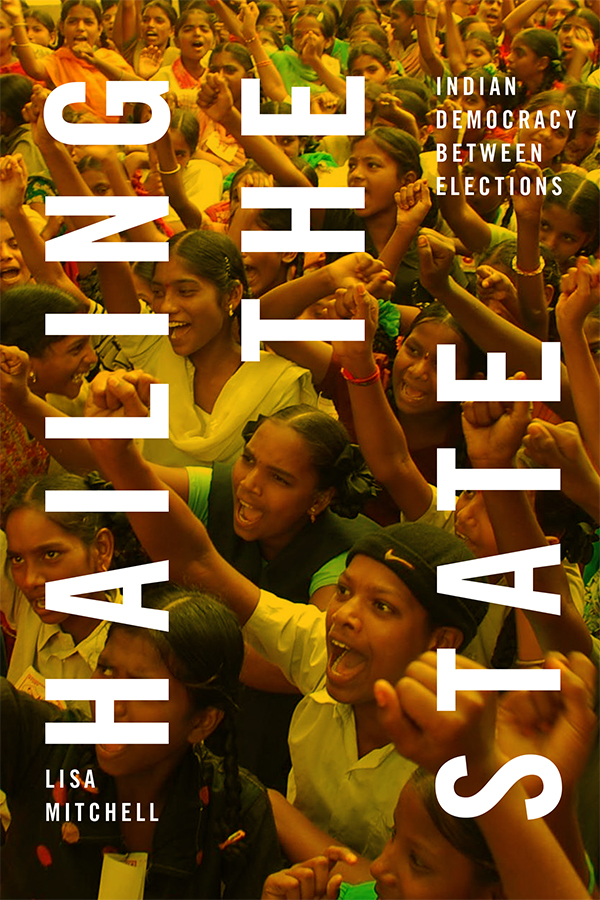 We are tirelessly reminded that India is “the world’s largest democracy.” In times of general elections, like the one taking place from 19th of April to 1st of June 2024, approximately 970 million people out of a population of 1.4 billion people are called to the ballot box in several phases to elect 543 members of the Lok Sabha, the lower house of India’s bicameral parliament. The election garners a lot of international attention. For some, it is the promise that democracy can flourish regardless of economic status or levels of income per head: India has been one of the poorest country in the world for much of the twentieth century, and yet has never reneged on its democratic pledge since independence in 1947. For others, it is the proof that unity in diversity is possible, and that nations divided along ethnic, religious, or regional lines can manage their differences in a peaceful and inclusive way. Still for others, India is not immune to the populist currents menacing democracies in the twenty-first century. For some observers, like political scientist Christophe Jaffrelot, India’s elections this year stand out for their undemocratic nature, and democracy is under threat in Narendra Modi’s India. And yet India is a functional democracy where citizens participate in voting at far higher rates than in the United States or Europe. Lisa Mitchell’s book Hailing the State draws our attention to what happens to (as the book’s subtitle says) “Indian democracy between elections.” Except during general election campaigns, foreign media’s coverage of Indian domestic politics is limited in scope and mostly concentrates on the ruling party’s exercise of power in New Delhi. Whether this year’s elections are free and fair will be considered as a test for Indian democracy. But as human rights activist G. Haragopal (quoted by the author) reminds us, “democracy doesn’t just means elections. Elections are only one part of democracy.” Elected officials have to be held accountable for their campaign promises; they have to listen to the grievances of their constituencies and find solutions to their local problems; they have to represent them and echo their concerns. When they don’t, people speak out.
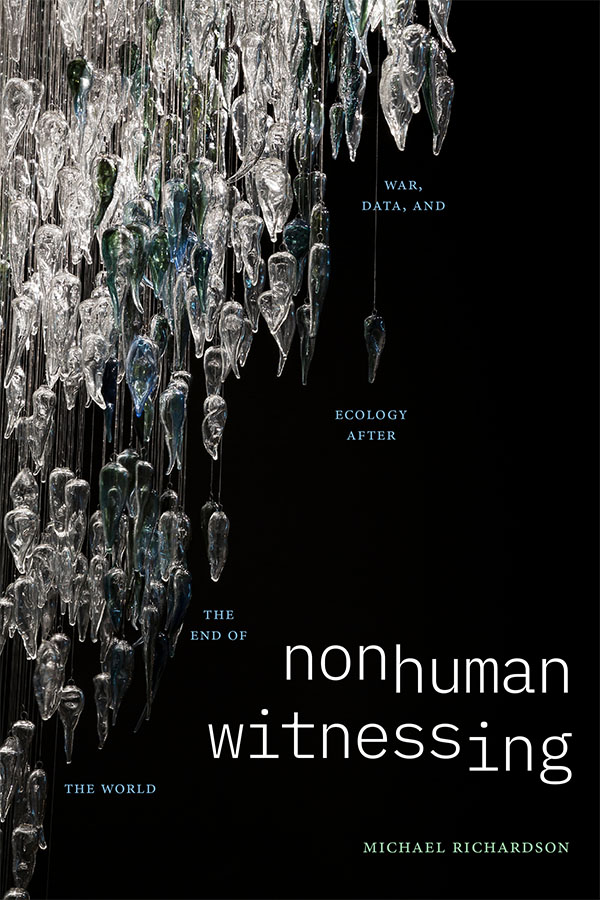 How to witness a drone strike? Who—or what—bears witness in the operations of targeted killings where the success of a mission appears as a few pixels on a screen? Can there be justice if there is no witness? How can we bring the other-than-human to testify as a subject granted with agency and knowledge? What happens to human responsibility when machines have taken control? Can nonhuman witnessing register forms of violence that are otherwise rendered invisible, such as algorithmic enclosure or anthropogenic climate change? These questions lead Michael Richardson to emphasize the role of the nonhuman in witnessing, and to highlight the relevance of this expanded conception of witnessing in the struggle for more just worlds. The “end of the world” he refers to in the book’s title has several meanings. The catastrophic crises in which we find ourselves—remote wars, technological hubris, and environmental devastation—are of a world-ending importance. Human witnessing is no longer up to the task for making sense, assigning responsibility, and seeking justice in the face of such challenges. As Richardson claims, “only through an embrace of nonhuman witnessing can we humans, if indeed we are still or ever were humans, reckon with the world-destroying crises of war, data, and ecology that now envelop us.” The end of the world is also a location: Michael Richardson writes from a perch at UNSW Sydney, where he co-directs the Media Futures Hub and Autonomous Media Lab. He opens his book by paying tribute to “the unceded sovereignty of the Bidjigal and Gadigal people of the Eora Nation” over the land that is now Sydney, and he draws inspiration from First Nations cosmogonies that grant rights and agency to nonhuman actors such as animals, plants, rocks, and rivers. “World-ending crises are all too familiar to First Nation people” who also teach us that humans and nonhumans can inhabit many different worlds and ecologies. The world that is ending before our eyes is a world where Man, as opposed to nonhumans, was “the unexamined subject of witnessing.” In its demise, we see the emergence of “a world of many worlds” composed of humans, nonhumans, and assemblages thereof.
 The Duke Reader